What you can do
- Tell world leaders Copenhagen wasn't good enough for the climate
- Call for an end to investment in Trident
- Design an activist stronghold to stop the third runway at Heathrow
- Tell your MP to change the politics and save the climate
- Become a member of Airplot and stand in the way of a third runway
- Make a donation - we can't do it without your help
Sellafield produces very little of anything - apart from headaches for its operators
Posted by ben on 3 March 2008.
More gloomy news from Cumbria, where yet another pall of tenebrous darkness has descended over the hapless nuclear monolith that is Sellafield. This particular cloud comes in the form of the hugely expensive and much-vaunted MOX Plant, whose job it is to turn reprocessed material (mainly in the form of plutonium and depleted uranium) into new MOX fuel.
In theory MOX, which stands for mixed oxide, can then be exported overseas and used to power some reactors in countries like France and Japan. In theory, that is. Because in practice it turns out the plant isn't producing much of anything. Apart from headaches for its operators.
Read more »Future radiation doses from waste dumping to exceed 2005 limits
Posted by bex on 4 November 2005.
These are the conclusions of an Environment Agency review of British Nuclear Group's applications for contimued disposal of radioactive waste at the Drigg low-level waste dump in Cumbria. The Agency says BNG has failed to make an adequate case for continued waste disposals, which could create an undue burden for future generations.
Download Greenpeace's recent submission to the Environment Agency regarding Drigg here (Adobe Acrobat PDF format).
Great myths of the incineration industry
Publication date: October 2001
Summary
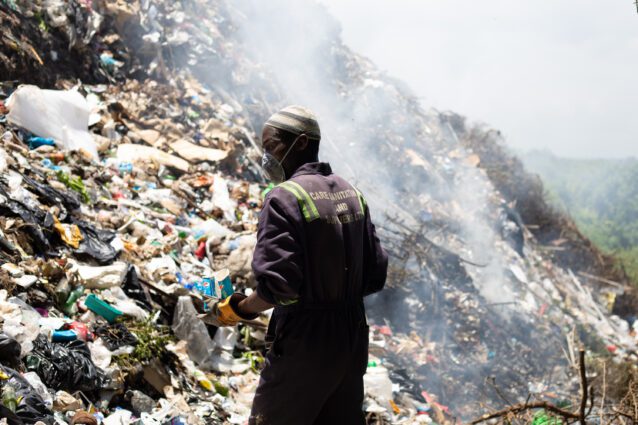
Emissions from modern incinerators pose no health risk Anyone who says modern incinerators are safe is either misinformed or lying.
Everyone knows the chemicals created and released during incineration process are dangerous. No one knows if the volumes discharged even from the most modern incinerators are safe.
The Environment Agency has conceded that it is "generally accepted that emissions standards are based on what can be measured and what is technically achievable, rather than what is safe" and that "the health effects which result from an incinerator's emissions are not yet fully known".
Environment Minister Michael Meacher admitted in June 1999 that "emissions from incin-erator processes are extremely toxic. Some emissions are carcinogenic We must use every reasonable instrument to eliminate them altogether".