Before the election George Osborne said, “Instead of the Treasury blocking green reform, I want a Conservative Treasury to lead the development of the low carbon economy and finance a green recovery.”
He added, “If I become Chancellor, the Treasury will become a green ally, not a foe.”
But today’s budget from George Osborne was the worst for the environment in recent memory.
Support for our clean tech manufacturing industries – already growing at 5% a year – could have become the corner stone of our economic recovery.
Instead, green industries were pushed aside to make way for a fossil fuel binge. Here’s a round-up of the most important announcements for the environment:
Gas burning
The most significant line in the speech in environmental terms was this one:
“Gas is cheap, has much less carbon than coal and will be the largest single source of our electricity in the coming years.”
First, if Osborne thinks gas is cheap, he’s clearly never paid his own gas bill. The rest of us know gas is hugely expensive. As both energy regulator OFGEM, and the government’s independent advisers – the Committee on Climate Change, have both highlighted – gas is the primary reason for the recent hike in household energy bills. The Office of Budget Responsibility has suggested (pages 90-93) gas prices will go up even further – putting millions of British families at risk of a further squeeze on their finances.
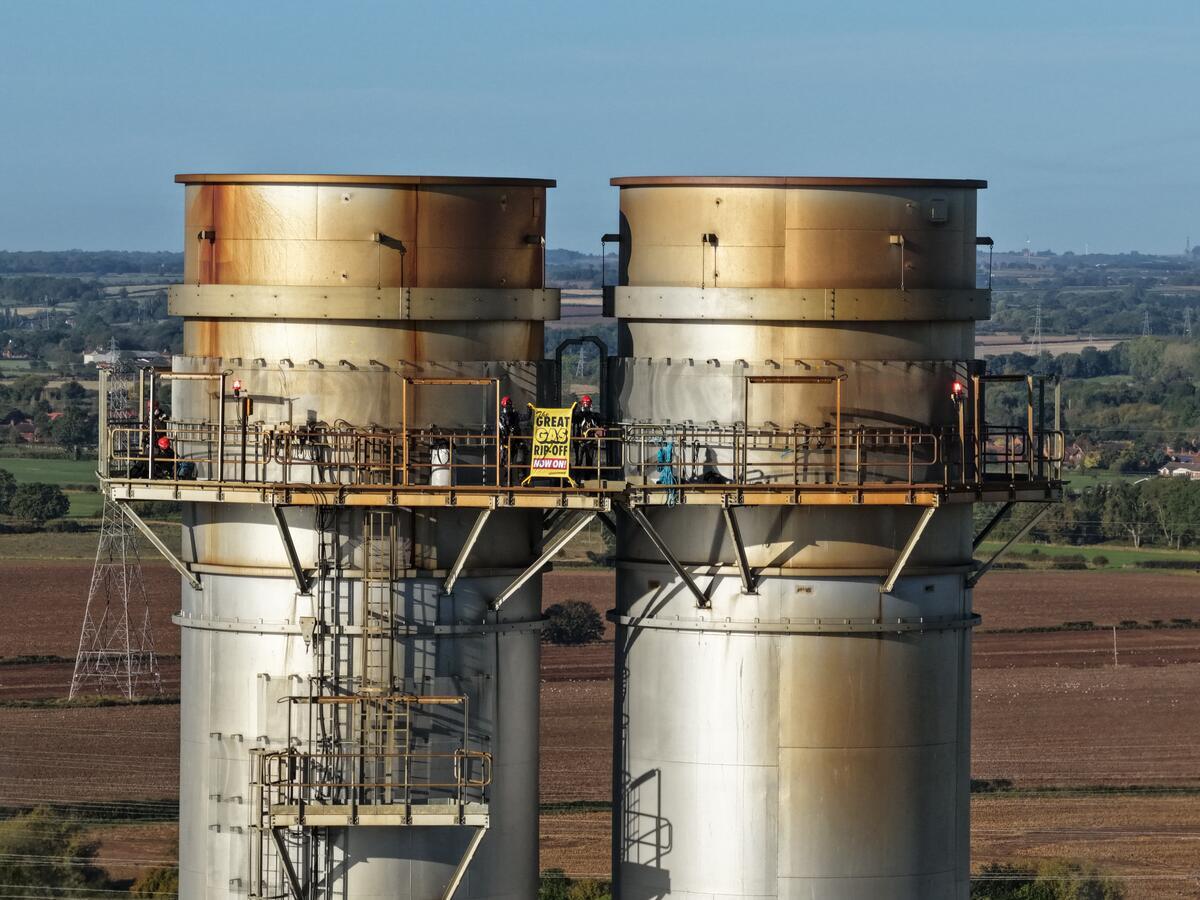
Second, whilst Osborne is right that gas is less polluting than coal, it’s still hugely polluting, and it's now the greatest risk to the UK failing to stay within our carbon budgets. A new dash to gas will squeeze investment away from renewable energy and efficiency, and lock us into high levels of carbon emissions for decades to come. The Committee on Climate Change – who advise Ministers on how to stay within our carbon budgets – says that the UK’s power sector must be almost zero carbon by 2030. If gas does indeed become “the single largest source of our electricity in the coming years” – it would make this almost impossible and would undermine, almost certainly critically, the UK’s efforts to curb greenhouse gas emissions.
Airport Expansion
In the coalition agreement David Cameron and his entire government promised no new runways at Heathrow, Gatwick and Stansted. Arguably, the abolition of the plan for a third runway at Heathrow was the Prime Minister’s most totemic green pledge. But today Osborne signalled an equally totemic u-turn, saying:
“I also believe this country must confront the lack of airport capacity in the South East of England – we cannot cut ourselves off from the fastest growing cities in the world. The Transport Secretary will set out Government thinking later this summer.”
Nothing’s changed since David Cameron and Nick Clegg ruled out new runways – except they’ve caved in to the aviation industry lobbyists. Osborne has effectively given the thumbs up to a jump in carbon emissions and two fingers to the huge numbers condemned to the blight of more noise and air pollution.
Drill, baby, drill
The Chancellor also took a leaf out of the Sarah Palin book with a taxpayer giveaway to the oil industry to incentivise new and risky deep sea oil drilling off the beautiful Shetland Islands. As The Independent recently reported, BP has admitted that a blow-out off Scotland could lead to the worst oil spill in world history. Osborne clearly doesn’t care. He took £3bn from hard working families and gave it to the oil majors for drilling. That’s the same amount of money he’s promised – but not yet delivered – for the new Green Bank. There were also further tax breaks for the oil industry – in addition to that £3bn – to help pay for the cost of cleaning up old oil rigs.
A new stealth tax dressed up as a green measure
Osborne also announced today the introduction of a new ‘carbon floor price.’ In theory, it’s a measure designed to ensure that polluters pay a price for their pollution. But the Chancellor seems to regard it as simply an opportunity to raise revenues. Greenpeace believes if he was serious about trying to bring down emissions, he’d use the money raised to help the growing number of people living in fuel poverty and to support industries trying to become more fuel efficient.
Today was a bad day for the environment – and it will be Britain’s precious countryside and wildlife, as well as those bearing the brunt of climate change that will pick up the tab.