GP Worldwide

Creative Commons

Email Print

Cod off! Birds Eye switches to pollock fish fingers

Trawling for cod

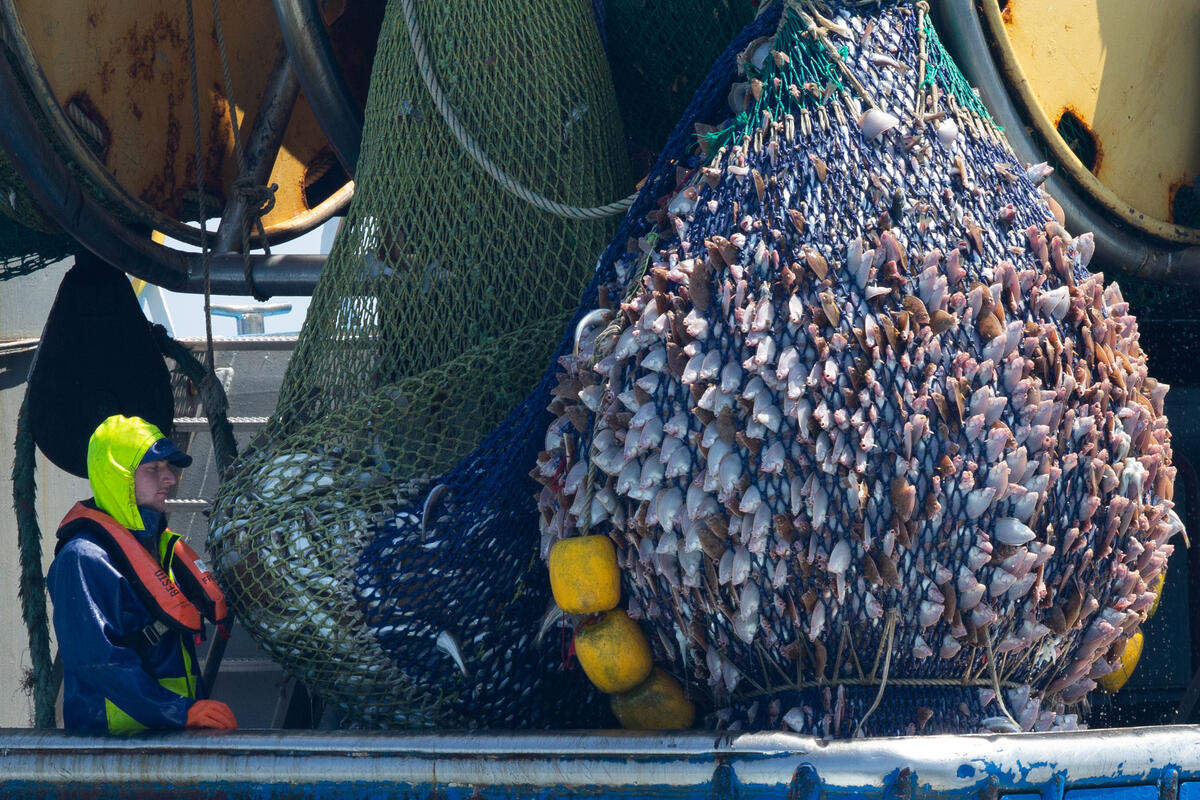
Frozen food giant Birds Eye finally bowed to the inevitable today and announced plans to reduce the amount of cod in its fish fingers in favour of Alaskan pollock. Birds Eye has been sourcing cod from the massively overfished Eastern Baltic Sea for many years, and for the past five years scientists have been saying that cod stocks are so depleted that all fishing must stop to give them a chance to recover. Until now Birds Eye has ignored this advice, even though it's already made a similar commitment to stop using cod from the North Sea, which is also seriously overfished.

Read more »
Email Print

Victory! Sweden (mostly) free from Baltic cod

a cod's eye view?

More good news for our oceans campaign. After successfully targeting UK supermarket chains like ASDA and Morrison's over their failure to ensure that the fish they sell comes from sustainable sources, we passed on the tip to other Greenpeace national offices to see if they could get similar results. Now we've had word from Sweden that, after a year's lobbying and pressure, supermarkets across the country will no longer stock frozen cod sourced from the Baltic Sea. This is a crucial development as baltic cod stocks have collaped in recent years, and much of the catch is illegally fished.

Read more »
Email Print

Greenpeace calls for 40% of the North and Baltic seas to be declared off limits

14 Jul 2004
Seals in the Wadden, North Sea

Seals in the Wadden, North Sea

Greenpeace Ship MV Esperanza to undertake ten week trip to research and defend marine life in the Dogger Bank and Viking Bank

On Wednesday (14th July) Greenpeace will be launching a campaign to designate approximately 40% of the North and Baltic seas as marine reserves - totally off limits to fishing, dredging, and mineral exploration.

Journalists are invited to visit the Greenpeace ship MV Esperanza this Wednesday (July 14th) to be briefed about the campaign (contact the press office to arrange an exact time). Esperanza will set sail from London Wednesday evening, to undertake a ten week tour defending marine life in the proposed marine reserve areas of the Dogger Bank and Viking Bank.

Greenpeace have produced maps proposing areas of the seas that should be protected - in the same way National Parks are protected on land. They include 7 proposed marine reserve areas in the North Sea, and 10 in the Baltic Sea. The maps are based on scientific survey data and include ecologically important habitats, as well as fish spawning and nursery grounds (1).

Download the North Sea (449kb) and Baltic Sea (715kb) Marine reserve maps; the files are available as PDFs.

The maps are part of a new Greenpeace report, 'Rescuing the North and Baltic Seas: Marine Reserves - a key tool' which outlines the many threats facing the North and Baltic Seas, such as over-fishing, mineral extraction and global warming. It argues that the seas urgently need to be protected for future generations.

The report critiques the effectiveness of current regulations that aim to protect the oceans, such as the Common Fisheries Policy and Habitats Directive. It argues that these regulations are failing to reverse drastic declines in fish stocks and in populations of other marine species. It argues that a new approach needs to be taken and proposes a ecosystem-based approach to managing the oceans, involving the establishment of large-scale marine reserves at sea.

Despite having been amongst the most productive seas in the world in the past the North and Baltic Seas today are amongst the most degraded in the world. Their decline is reflected by crashes in fish stocks and populations of marine mammals and increases in pollutant levels in sea life. For instance:

  • North Sea Cod stocks have declined drastically over recent decades, with catches dropping by around 50 percent between 1996 and 2001. Indeed North Sea Cod, along with common skate and spotted ray (Raja montagui), has been included on the list of threatened and declining species by the OSPAR Commission for the Protection of the Marine Environment of the North East Atlantic. (2)
  • North Sea Harbour Porpoise populations: Porpoises, which depend on echolocation to make sense of their surroundings, are regularly caught in bottom set gill-nets, as they fail to detect the thin but strong nylon fibres, become entangled and drown. One study estimated that the annual bycatch of harbour porpoises for the years 1994-98 in the Danish set-net fishery alone was around 7,000 animals. If this level of bycatch continues experts predict harbour porpoises may become extinct in this area (3).
  • Polluted sealife: Recent health warnings about levels of persistent organic pollutants (POPs), in fish reflect the increasing exposure of all levels of marine life to toxic chemicals. In 2004, Danish fisheries for two species in the Baltic were closed due to high dioxin concentrations in the landed fish. The salmon fishery was closed on 1 April, while in May the herring fishery east of Bornholm was closed.

The positive news is that studies of marine reserves from around the world, including the Leigh Marine Reserve in New Zealand and the Apo Island Reserve in the Philippines, show that protecting areas of the sea does lead to regeneration of fish and other marine species, both inside and beyond the reserve (4).

Greenpeace recognises that it will take several years for governments to develop a mechanism at the EU level for establishing large-scale marine reserves. Until this network of marine reserves is established, Greenpeace is calling for:

  • A moratoria on extractive activities, including fisheries, new oil exploration and sand and gravel extraction, within in the proposed marine reserve areas, implemented through the Common Fisheries Policy and national legislation.
  • A total ban on cod fishing in the Baltic and North Seas, implemented through the Common Fisheries Policy.

Greenpeace UK Oceans Campaigner Sarah Duthie said, "If you want your children to be able to eat cod or mackerel, or be able to see dolphins in the North Sea then you should support the idea of large scale marine reserves - essentially national parks at sea".

She continued, "Today's situation, where scientists are warning that cod could disappear from the North Sea in the same way they did from Canada's Grand Banks yet we carry on fishing is total madness. The seas are huge but what's happened to cod stocks shows they are finite".

Greenpeace Nordic is currently undertaking a research and documentation tour of the Baltic Sea.

The Esperanza tour follows on from a tour undertaken in January this year, to document the effect of pair trawling fisheries on dolphin populations.

Further information
For more information or to organise a place onboard Esperanza during the North Sea tour (spaces strictly limited), contact Louise Edge, Greenpeace press office on 020 7865 8115 or 07801 212993.

Photographs and broadcast quality background footage are available from the Greenpeace Press Office. Black and white illustrations of beam trawling and gill netting are also available, along with an illustration demonstrating the range of threats facing the North Sea.

(1) To identify marine reserve areas, a research team collected as many data sets as possible relating to the location of Marine Protected Areas (existing and proposed), ecologically important species and habitats, various fishing activities and other potentially damaging human activities within the region. These data sets were sourced from the relevant authorities, research institutes and NGOs in the countries which encompass the North and Baltic Seas. The data (mainly spatial, but some quantitative) was then inputted into a Geographical Information System (ArcGIS by ESRI). This software made it possible to overlay the different data sets so enabling determination of the areas of greatest ecological value. By adding the locations of fisheries and other potentially damaging human activities, human impacts could also be assessed. From this process, Greenpeace has identified seven potential marine reserves in the North Sea and ten in the Baltic, which together would form an ecologically coherent network.

(2) According to the International Council for the Exploration of the Sea catches of cod from the north sea in 1996 were 106,568 metric tonnes. By 2001 this had dropped to 40,973 metric tonnes.

(3) Source: the 5th International Conference for the North Sea 2002.

(4) Source: WWF report 'fully protected marine reserves - a guide'.