Email Print

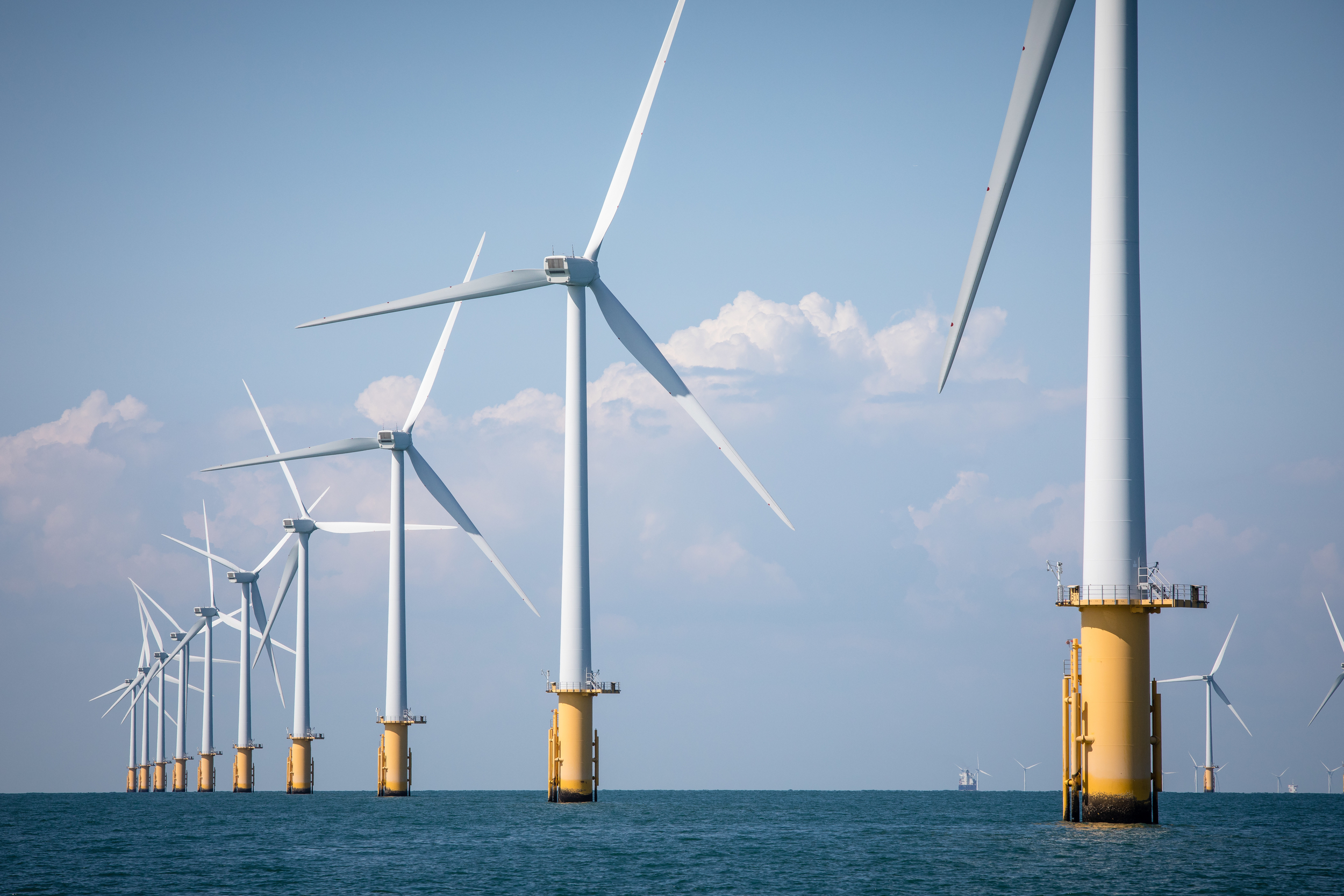
New York Times: Britain facing hard slog to 2020 renewable energy targets

Beset by an outdated grid, escalating costs and delays at massive offshore wind farms, and a domestic biofuels industry priced out by US imports, the UK will struggle toward its 2020 renewable energy targets.

Original Article Link
Email Print

Biofuels in planes - coconuts?

coconuts

Three million coconuts to get to Amsterdam? I'd rather take the train.

Over the last few months, four pilots in different corners of the world have held their breath, crossed their fingers (metaphorically) and, mid-air, flicked a switch to send a blend of kerosene jet-fuel and biofuel into their plane engines.

Read more »
Tags:
Email Print

BP's 4th quarter profits slump "a clear warning to investors"

Risky investment in tar sands and continued failure of alternative energy division threatens future profitability of oil major
3 Feb 2009

BP's announcement of record profits masks major flaws in the company's long term investment strategy, according to analysts at Greenpeace and PLATFORM.

Strong growth recorded in the first half of 2008 was undermined by a collapse in profits during the final quarter, indicating a vulnerability to oil price fluctuations which will continue while BP remains wedded to an “oil at any cost” strategy.

Analysts from both groups criticised the company for its investment decisions which they claim have failed to take a new political, environmental and regulatory climate into account.

In March 2008 BP finalised its $5.8bn investment in the Sunrise tar sands project in Alberta, Canada. Since then the future of the tar sands industry has been thrown into question as oil prices fell below the breakeven point of most tar sands projects, and a new era of clean energy legislation has been proposed by the Obama administration.

Reacting to the news, Greenpeace chief climate advisor Charlie Kronick said:

"These results prove that BP's investment decisions are going in the wrong direction. The Canadian tar sands project is a clear threat to investors, while the alternative energy division has been left to wither on the vine despite the urgency of climate change."

Whilst James Marriott, Partner of PLATFORM said:

"The company is wedded to a 20th century business model which is simply not flexible enough to cope with the twin challenges of global climate change and increasingly remote oil reserves. Shareholder returns are bound to fall as the political, environmental and regulatory climate changes dramatically over the next few years."

Last week the head of the Sunrise field, Catherine Hughes, resigned her post amid rumours of a delay in the project, and BP's annual results confirm that production has been put back until 2013. Since October 2008, dozens of tar sands projects have been put on hold, including three major projects proposed by BP’s main rival Shell.

Rumours of the Sunrise project being scrapped remain unconfirmed, but as a high cost SAGD (1) investment it appears unlikely that it will go ahead as originally planned. BP spent $250 million on the project during the 2008 financial year, and is committed to a total spend of over $2.5 billion over 4-5 years.

CEO Tony Hayward told investors at Davos that "The price needed today to stimulate investment into that [oil sand] resource is of the order of $60 to $80 a barrel." Oil currently languishes at $40 per barrel and this price remains highly volatile.

The results also reveal the disastrous performance of BP’s Alternative Energy division, which lost $633m over the past year. Greenpeace points out that despite axing staff and pulling investment from the division, BP has continued to spend heavily on a worldwide advertising campaign which gives the false impression that alternative energy represents a core part of the company’s business. (2)

In fact, the company diverted 93% of its 2008 capital expenditure towards oil and gas extraction, compared with just 1.3% on solar energy, 2.6% on wind and a similar amount on biofuels (3). The head of BP’s alternative energy decision recently admitted that “limits on capital spending in the existing portfolio” had been imposed on clean energy projects. (4)

For more information please contact the Greenpeace press office on 0207 865 8255

Or PLATFORM on 0207 403 3738

Footnotes

(1) SAGD is Steam Assisted Gravity Drainage, a highly energy intensive and therefore expensive method of extracting bitumen from the deeper deposits in Alberta’s tar sands belt. It involves injecting steam into the reservoir to heat the bitumen so it can be pumped to the surface.

(2) One of BP's more notable adverts claims the company works with "the earth, the sun and everything in between." Another states that "the best way out of the energy mix is an energy fix." See "BP wins coveted emerald paintbrush award" for more details.

(3)http://www.bp.com/liveassets/bp_internet/globalbp/STAGING/global_assets/downloads/I/IC_bp_strategy_presentation_2008_slides.pdf

(4) http://www.guardian.co.uk/business/2009/jan/20/bp-oil-green-energy

ENDS

Email Print

EU pulls a renewable energy surprise out of the bag

Despite the gloom coming out of the EU climate talks at the end of last week (and the non-event that UN discussions on the same topic in Poznan appear to have been), there is one ray of hope shining from Brussels in the form of the Renewable Energy Target which will set binding goals for EU governments on sourcing energy from renewable sources.

It's been a tough road, not least because of ex-business secretary John Hutton's attempts to weaken the deal. Then it looked like some countries - Italy and Poland were the ringleaders - were going to knobble the agreement by demanding it be reviewed in 2014 but a compromise was put forward and a deal has been reached.

Read more »
Tags:
Email Print

Petrol stations are pumping out bad biofuels

Land clearing in Sumatra Indonesia

We knew the government's plans on biofuels were a bit of a mess, but figures released today by the Renewable Fuel Agency show just how bad the situation is.

First off, the agency reports that 80 per cent of biofuels used in the UK don't meet government sustainability targets. In fact several companies, including BP and Esso, admitted that they didn't produce a single litre of biofuel that met the government's qualifying environmental standard.

Read more »
Tags:
Email Print

Climate actions in Gatwick, Essex and... Legoland?

The Lego replica of Kingsnorth power station complete with 'Stop Climate Change' banner

The Lego replica of Kingsnorth power station complete with 'Stop Climate Change' banner © Hans Bricks

Not one, not two but at least three climate change-related happenings popped up around the country yesterday, many of them carried out by Climate Camp attendees. Although the camp is primarily focused on coal and the proposed new power station at Kingsnorth, today's activities also highlighted other climate threats such as aviation and biofuels. Here is just a taste of what's been happening:

Read more »
Tags:
Email Print

Biofuels failing 'green' standards

From today's Guardian:

"Less than a fifth of the biofuel used on UK roads meets environmental standards intended to safeguard human rights and guarantee carbon savings, figures released today show.

"The Renewable Fuels Agency says just 19% of the biofuel supplied under the government's new initiative to use biofuel to help tackle global warming met the green standard. For the remaining 81% of the biofuel, suppliers could not say where it came from, or could not prove that it had been produced in a sustainable way."

But even this "green" standard is misleading, as it ignores the side-effects of biofuel production such as massive deforestation:

"The standard does not include carbon emissions from indirect effects such as changes in land use caused by biofuel planting, which experts have warned could cancel out their environmental benefits."

Tags:
Email Print

Gallagher Review: Put the brake on biofuels

Biofuels

Not so long ago biofuels were billed as a silver bullet that could cut greenhouse gas emissions from the transport sector. But, as recent studies have confirmed, many are worse for the climate than the fuels they replace and they are also contributing to price rises for food. This week the government-commissioned Gallagher review on the indirect impacts of biofuels has been released and confirms that chasing current EU and UK biofuels targets is unsustainable. You may think that the government would have been more prudent before setting mandatory targets for the use of biofuels, but in fact currently there is no sustainability criteria attached to them, leading to the use of highly questionable fuels.

Read more »
Tags:
Email Print

Gallagher biofuels review - Greenpeace responds

8 Jul 2008

Ruth Kelly today announced the publication of the Gallagher review into the indirect effects of biofuels. Although the Government accepted the findings of the report, it refused to call publicly for an end to the EU's overall target which would see 10% of European energy produced by biofuels by 2020. This was one of the key recommendations of the Gallagher review.

Reacting to the release of the review Greenpeace chief scientist Dr. Doug Parr said:

"This review sends a stark message - using food crops to fuel our cars risks making climate change worse and increasing food prices for the world's poorest people.

"Gordon Brown must now follow one of the key recommendations of his own report and call for an end to the EU's hastily adopted and potentially damaging biofuel targets.

"He needs to promote the real alternatives instead, like making our cars more fuel efficient and boosting the number of vehicles powered by clean, renewable electricity.

"This is the kind of leadership we need from a Prime Minister who claims to be serious about fighting climate change and serious about tackling global poverty."

For a full briefing on the indirect impacts of biofuels please visit www.greenpeace.org.uk/gallagherbriefing

For further information please contact the Greenpeace Press Office on 0207 865 8255

Email Print

Media Brief – Gallagher Review to be published early July

Publication Date: 
7 Jul 2008
Body: 

The Gallagher Review is a major study commissioned by the UK Government on the 'indirect' or 'displacement' impacts of biofuels on carbon emissions from land use change and on food security. It is being conducted by the Renewable Fuels Agency - a new body set up to administer UK biofuel policy. This briefing describes what biofuels are, explains the difference between direct and indirect impacts of biofuels and the implications for biofuels policies in the UK and EU.