GP Worldwide

Creative Commons

Email Print

World's whales and dolphins may face growing sonic threat

A dead dolphin - the victim of bycatch - lying on a beach

In Chile, the world's scientists are already meeting in advance of the 60th International Whaling Commission (IWC), which will be held there in late June. At this time of year, the eyes of the world turn to the deadlocked struggle between pro-conservation and pro-whaling countries as they clash over the future of whaling at the IWC meetings. And recent events have not been going well for the whalers - in recent weeks we have seen just how desperate the pro-whaling nations are to play down not only the recent scandal of stolen whale meat in Japan, but also the saga of exporting whale meat from Iceland and Norway. Both stories highlight the extent to which the whalers are routinely flouting not only international opinion but also the global ban on commercial whaling and the trading of whale meat.

Read more »
Email Print

Undermining international opinion on whaling

Fin Whale

It’s been reported that, after a gap of 20 years, Iceland and Norway may have resumed the export of fin and minke whale meat to Japan. These countries continue to blatantly defy the International Whaling Commission’s ban on commercial whaling, and any trade in whale meat also undermines the ban on trading in whale products under the Convention on International Trade in Endangered Species.
Read more »

Email Print

At last some action on bottom trawling

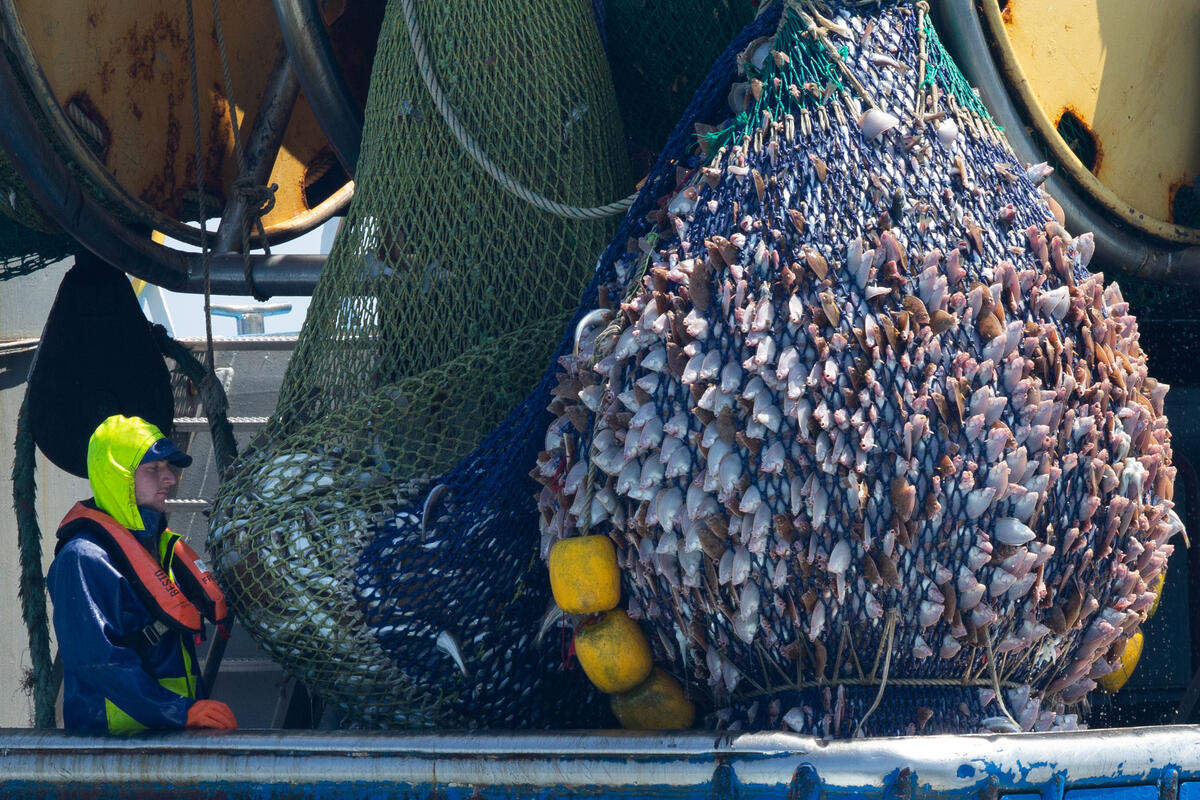
Very few orange roughy and a lot of bycatch, including several seastars, urchins, and numerous unwanted fish, in the net of the New Zealand deep sea trawler Recovery II in international waters in the Tasman Sea.

Bottom trawling, possibly the most destructive fishing method yet devised by man, is to be regulated across the whole North Atlantic ocean. The process, which involves dragging nets weight down by metal girders across the seabed, is notorious for its wastefulness. Besides legitimate target species such as cod, plaice and sole, vast quantities of corals, sponges and other deep sea creatures are destroyed as bycatch. The devastation caused is so great that Greenpeace has been calling for some time for a moritorium (suspension of activity) on bottom trawling. Now it looks as though some progress may be being made.

Read more »
Email Print

Iceland ends commercial whale hunt

Iceland's senseless resumption of commercial whaling has now been suspended

In a setback to the whaling industry worldwide, Iceland's fisheries minister has just announced he will not issue further commercial whale-hunting quotas.

Iceland announced last year a return to commercial whaling and a quota of 30 minke whales and nine fins. But with virtually no market in Iceland and fears of contamination making Japan unwilling to purchase North Atlantic whale meat, the hunt has been a disaster. Since its introduction last year, Icelandic whalers have killed only seven minkes and seven fin whales, haven't made public the results of contamination testing on the whale meat, and can't seem to convince anyone to buy their product.

Read more »
Email Print

"Wind of change" hits seafood industry

At last some good news for  crisis stricken cod

At last some good news for crisis stricken cod

The success of our sustainable seafood campaign means that many UK supermarkets now source most of their cod from Icelandic waters - which are the healthiest when compared to the battered state of other European stocks (in the North, Baltic and Barents seas, for example), but also a region in which fish numbers are declining. This decline is now having a great influence on Iceland's approach to managing its cod stocks.

Read more »
Email Print

Fingers crossed - it's IWC 59!

IWC 59: how the voting's going

It's time for us whale lovers to hold our breath and cross our fingers yet again as we watch developments at the 59th meeting of the International Whaling Commission, now underway in Anchorage, Alaska.

For the past few years the IWC, charged by the United Nations with protecting whales, has been the focus of serious lobbying by some whaling nations to allow a resumption of commercial whaling - suspended since 1986 following a dramatic decline in the number of great whales worldwide.

Read more »
Email Print

Endangered whales dumped in landfill site

A fin whal carcass rots at an Icelndic whaling stationNo sooner has Iceland granted permits for some of it's fisherman to resume commercial whaling than they discover, big surprise, what informed opinion has been telling them all along - namely that they would struggle to find any market for the meat. 200 tonnes of whale meat is in storage while tests are done on its toxicity, and even Sigur Read more »

Email Print

Iceland dumps whale meat in landfill site

23 Jan 2007
An endangered fin whale on the harbour of Hvalfjrour, Iceland

Endangered whales - hunted, stockpiled and left to rot on a rubbish dump

The Icelandic government's claims of sustainable whaling were harpooned this morning, after Greenpeace activists revealed that around 200 tonnes of meat and blubber from endangered fin whales are still in storage, waiting to be tested for chemical contamination and a further 179 tonnes of bones and entrails have been dumped in a landfill site.

The Icelandic whale meat and blubber are intended for export to Japan, despite whaler's claims that some of the generated product is not fit for human consumption. The Japanese whaling fleet is currently preparing to hunt 10 more fin whales and 935 minke whales in the Southern Ocean Whale Sanctuary, despite having massive stockpiles of more than 4400 tonnes of unsold whale meat in freezers in Japan. At the end of last year a single whaler, given a commercial license by the Icelandic government killed seven fin whales.

"Iceland claims their commercial whaling is sustainable - but how can they justify it when they are hunting endangered species, without domestic demand, and over-supply of whale products in Japan?" said Greenpeace Nordic Oceans campaigner, Frode Pleym. "Both Iceland and Japan continue to whale in the face of domestic and international opposition, even though there is no scientific, economic or environmental justification for it," added Pleym.

Greenpeace has launched its biggest ever global recruitment drive - inviting tens of thousands of people to campaign to stop whaling via a new website - http://whales.greenpeace.org. The first demand of the newly expanded campaign team was for anti-whaling countries to commit to reforming the IWC and refuse to attend a pro-whaling meeting in Tokyo next month, sponsored by the Japanese government.

"In a recent opinion poll by the Nippon Research Centre, 69 per cent of Japanese people said they do not support the government whaling on the high seas, including the Southern Ocean Whale Sanctuary," said Junichi Sato, Greenpeace Japan Whales campaign coordinator. "It is also no surprise that there are massive stockpiles of whale meat, when the same survey shows that 95 per cent of people never or have rarely eaten whale meat. It is time for all governments to make a commitment to the whales and not an outdated, unwanted and pointless industry." Sato added.

On Thursday the Greenpeace ship Esperanza will sail to the Southern Ocean, in order to put themselves between the grenade-tipped harpoons and the whales, to stop individual whales being killed.

Contact:
Sara Holden: Greenpeace International communications, on board the Esperanza in New Zealand: + 64 212 607 255
(sara.holden@int.greenpeace.org)

Frode Pleym: Greenpeace Oceans Campaigner, in Iceland: + 46 703 535 766 (frode.pleym@nordic.greenpeace.org)

Keiko Shirokawa: Greenpeace Japan, in Tokyo, +813 5339 9816

For photos: John Novis, Photo Editor, in Amsterdam: +31 653 819 121
For video: Maarten Van Rouveroy, in Amsterdam: +31 646 197 322