What you can do
- Tell world leaders Copenhagen wasn't good enough for the climate
- Call for an end to investment in Trident
- Design an activist stronghold to stop the third runway at Heathrow
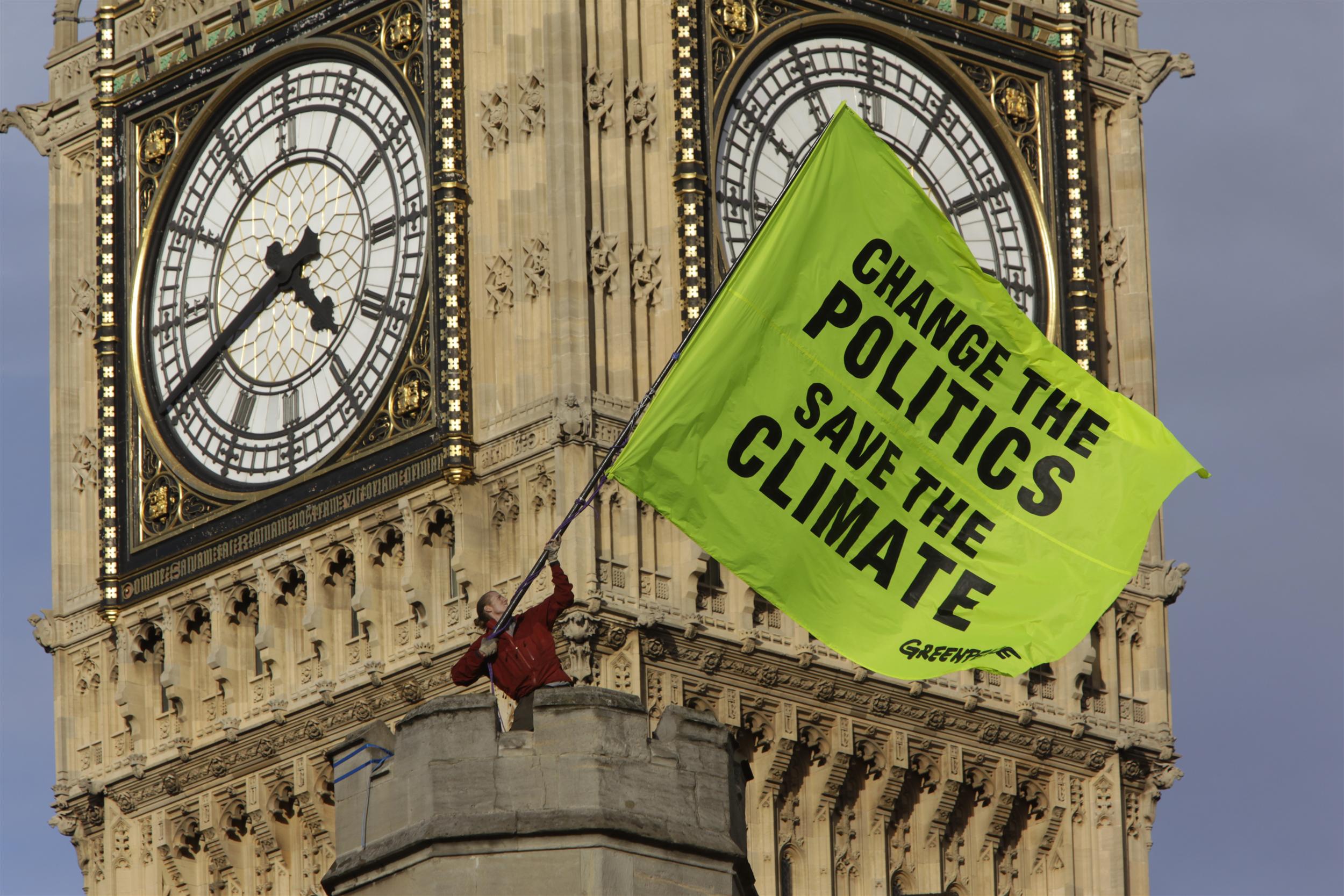
- Tell your MP to change the politics and save the climate
- Become a member of Airplot and stand in the way of a third runway
- Make a donation - we can't do it without your help
The Environmental Trust: Cool Waste Management
A State-of-the-Art Alternative to Incineration for Residual Municipal Waste- MBT
Publication date: February 2003
Summary
The aim of this study is to assess the possibilities for a
system for managing residual waste which does not include
any thermal treatment process. The study includes a review
of mechanical biological treatment (MBT) systems and their
potential effects.
MBT systems are not new. In their more primitive guises,
they can be considered a basic evolution from the (usually
failed) mixed waste composting plants of two decades ago.
However, the potential for integrating systems based around
biological treatment of degradable fractions with increasingly
efficient mechanical separation techniques is a more recent
development, as is the tendency to look to employ digestion
techniques for the biological treatment phase as opposed to
aerobic treatments.
Greenpeace submission to the PIU review of the Governments waste strategy
Submission to the Governments Strategy Unit review of UK waste policy
Publication date: July 2002
Summary
The UK Government knows its current waste policy is not working and not popular. It has set up an investigation into whether the reliance on incineration should be abandoned. Greenpeace has attended the seminars held by the Strategy Unit and submitted the following document:
Greenpeace believes that the Government's "Waste Strategy 2000" is not achieving its
desired outcome either in terms of quality ("more sustainable waste management") or
quantity (maximising the amount of waste recycled and reducing the quantity of waste
produced).
Although mandatory recycling targets are beginning to encourage better collection
methods and increased recycling of some materials in some areas, the strategy as it
stands is unlikely to achieve more than very moderate gains.
This is because of clear policy shortcomings, particularly a lack of incentives for local
authorities to avoid waste disposal altogether, incentives for some forms of disposal
(particularly incineration under the guise of "energy recovery") and extreme ambiguity
from the Government regarding best practice.
Composting and current UK regulations
Greenpeace briefing
Publication date: May 2002
Summary
The entire waste management industry is currently in a state of virtual paralysis with regard to composting.
The Department of the Environment says that composting of municipal organic waste is "a vital component of meeting Waste Strategy targets" and that "The Government supports the composting of waste". (DEFRA Briefing note on compost June 2001). Yet it's regulatory body, the Environment Agency, will not currently permit compost derived from kitchen waste to be used in the open and has made it virtually impossible for new composting initiatives to gain a licence.
As a consequence local authorities and waste companies are turning to incineration to get organic waste out of landfill sites. This is totally nonsensical. Incinerators release many chemicals with potentially severe health impacts in stack gases and in ashes. Food waste, mixed with all manner of other materials is dumped in huge bunkers where it can remain rotting for days. Kitchen waste is a very poor material to burn - it is very wet and has a low calorific value. The organic material should be going back into the soil where it can return nutrients, carbon and improve soil texture. Compost has a high environmental value. It also has a potentially high economic value, but not until the Government sorts out the mess it has made.