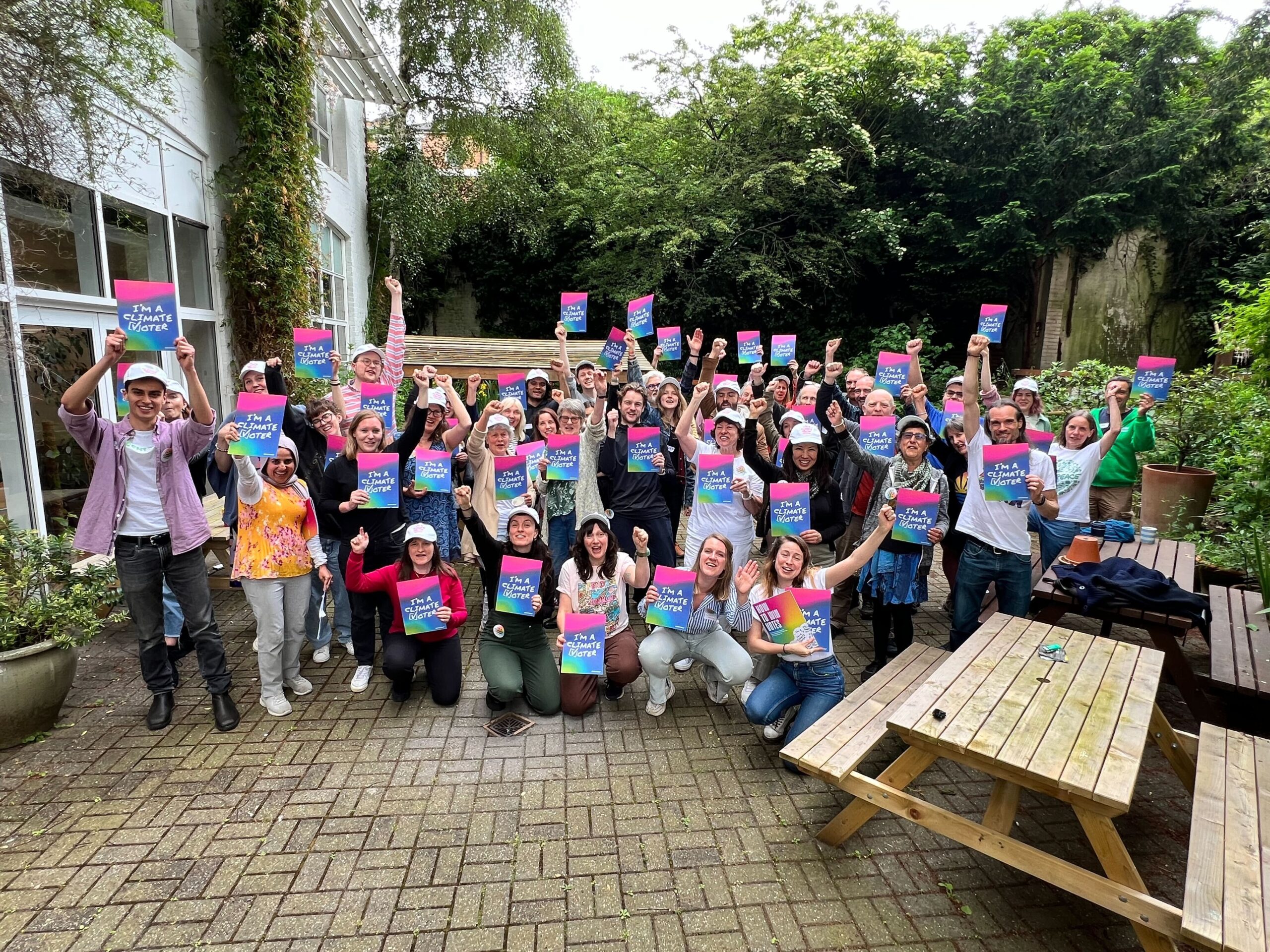
2026 local elections in England: what are the parties saying on climate and nature?
See how our experts assessed the main parties’ positions on nature and climate.
On 7th May, voters across England will elect thousands of councillors across the country.
You might not think your vote matters. But it does. The results of this election will tell the government whether voters want a change – and what kind of change they want to see. There is often low turnout in local elections, and results really can come down to a handful of votes. So if you care about restoring nature and tackling the climate emergency, it’s time to make your voice heard.
ON THIS PAGE
Who should I vote for?
How you decide to vote depends on what matters most to you. In local elections, parties will usually produce local pledges that you might receive in leaflets about their priorities for the area. Sometimes they will produce local manifestos as well. We haven’t analysed every local party’s pitch across England, but instead we have summarised what the national parties have been saying (and doing) on climate and nature. Local elections are a bit like mid-term elections: as well as determining who represents you locally, the overall results of the local elections will send a strong message to the government about how the country is feeling and on what issues people want to see more action from the government.
On this page you can find out more about what the parties have been saying about climate and nature.
In case you missed it, you can also read the Greenpeace and Friends of the Earth’s full analysis of the major parties’ manifestos ahead of the 2024 general election.
Share this guide:
Party positions on nature and climate
What have the major political parties in England been saying (and doing) on nature and climate since the general election?

Conservative Party
Greenpeace analysis
Wow. What a downward spiral for the Conservatives, and it wasn’t like they were starting from a particularly strong position. In a race to the bottom with Reform UK, the Conservatives have abandoned any remaining commitments to climate action and are doubling down on their commitment to drill for the last drops of oil and gas that remain in the North Sea. Their current plans on nature and climate are not only bad for the environment, they make no sense for the economy either.
Strengths
- Nothing to note. The Conservatives have abandoned their previous commitments to climate and nature action.
Weaknesses
- Completely dropped their commitment to Net Zero by 2050, despite being the party that introduced it in 2019. They have said they’ll repeal the Climate Change Act, even though they pressed for its introduction in 2008.
- Doubled down on support for North Sea oil and gas, despite the fact that drilling in the North Sea will do nothing to protect our energy security or lower our bills (as the sites and profits are owned by international companies, not the UK government), and the fact that 90% of the available oil and gas has already been extracted.
- Committed to scrap the Energy Profits Levy, which taxes the windfall profits of oil and gas companies. The tax only affects ‘windfall profits’ which accumulate as a result of international shocks such as global conflicts and wars, and has been key to raising funds for our public services.
- Following Labour on attacking ‘red tape’ – better known as protections for biodiversity and wildlife – which have taken years to build.

Green Party
Greenpeace analysis
In 2024, the Greens quadrupled the number of MPs they held – and have since won another high profile by-election from Labour. Despite only having 5 MPs, the Green Party is punching above its weight and pushing the Labour government to go further and faster on climate action, especially when linked to the cost of living crisis, as well as holding Labour to account on areas the government is lagging behind on – like protection for nature and the crackdown on protest rights. The new Green Party leader deserves particular credit for connecting climate action to improving people’s day to day lives, demonstrating the co-benefits of fair and equitable climate action.
Strengths
- Strongly calling for the end of oil and gas drilling in the North Sea
- Support for Greenpeace’s plan to decouple the price of gas from the price of electricity to lower people’s electricity bills.
- Included creating a ‘Rights of Nature Act’ and the 30 by 30 target for land managed for environmental protection in their 2024 manifesto.
- Tabled the Plant Protection Products Bill in April 2025, targeting the use of pesticides by local authorities.
- Launched theNature Action Now campaign in 2025, pushing for stronger legal protection for nature.
Weaknesses
- Traditionally associated with environmental protection, the Greens have received criticism for not focusing on this in recent months, preferring to focus on other topics.
- The Green Party had some notable absences in its manifesto for Wales – including no mention of a target to achieve net zero. You can read more of our analysis of the manifestos for Scotland and Wales.

Labour Party
Greenpeace analysis
Since being elected, the government has maintained a strong commitment to delivering renewable energy and last year announced a world leading ban on new licenses for oil and gas drilling in the North Sea. With growing political opposition to net zero, which is out of step with how the public feels about climate action, the Labour government has stayed firm. During the current fossil fuel price spike, driven by the USA’s war on Iran, Labour has doubled-down on its commitment to renewables as the only way of providing energy independence, long-term security of supply and price stabilisation. But we need to see the Labour government go further and faster. In order to reduce emissions, the government must turn its attention to energy efficiency measures – electric vehicles, home insulation and heat pumps are all ways to reduce energy usage and therefore reduce both emissions and household bills! While the government has been strong on climate, the same cannot be said for its rhetoric and action on nature – which it often pitches in opposition to economic growth. Restoring nature is not just essential for our climate, it’s also essential for our national security and prosperity. And alongside this, the Labour government has continued what the previous Conservative government started in cracking down on our right to protest – despite previously opposing these anti-democratic laws.
Further reading
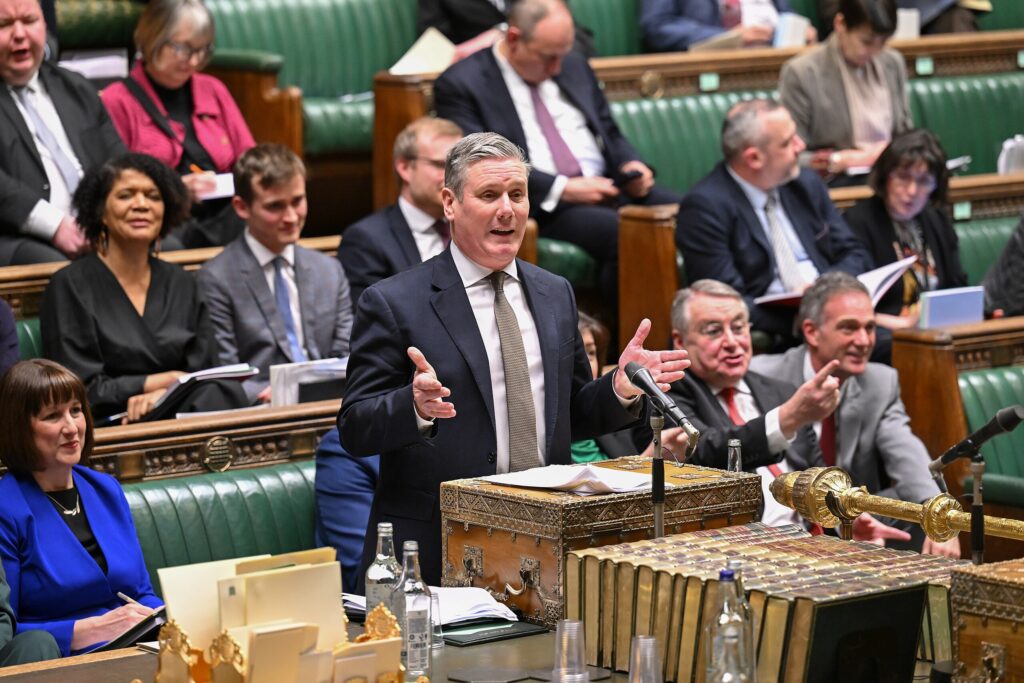
One year of Labour: what has Keir Starmer’s government achieved so far?
A first-year report card for the UK government.
Strengths
- The Labour Party stood on a strong climate platform in the 2024 general election. However, they ditched their £28 billion climate pledge in the run up to the election and investment has been much lower, although a significant uplift.
- Since the election, the Labour government has stood by their Clean Power 2030 plan despite STRONG opposition.
- Labour, in government, also lifted the de facto ban on onshore wind almost as soon as they entered office and pledged to ban fracking.
- Supported the expansion of rooftop solar on hospitals and schools and recently announced plans to lower electricity costs by delinking them from high gas prices.
- The Labour government made a world-leading commitment to end exploration licences for new oil and gas in the North Sea, but are wavering on consents for existing drilling licences, including Rosebank, Jackdaw and Cambo.
- The Labour government has promised to sign the Global Ocean Treaty into UK law, which is key to finally creating global ocean sanctuaries, but has yet to complete the process.
Weaknesses
- Attempted to bury a crucial report from the joint intelligence committee on the national security impact of biodiversity loss and ecosystem collapse. An abridged version of the report has since been published, but only after a Freedom of Information request forced the government’s hand.
- Slashedinternational aid to 0.3% of overall spending. As a result, international climate finance will be cut by around 14%, putting our international obligations, national security, collective efforts to halt climate impacts, and ultimately lives across the world at risk.
- Consistently pitches nature protections in opposition to economic growth, despite providing the bedrock to our economy, food security, health and wellbeing. This was especially clear during the passage of the Planning Bill.
- The Labour government still sponsors two dodgy exploration licenses for deep sea mining, despite supporting a moratorium on international deep sea mining.
- Banned the direct action group Palestine Action under anti-terror legislation, which has since been found to be unlawful, and is attempting to introduce further restrictions on the right to protest via its Crime and Policing Bill.

Liberal Democrats
Greenpeace analysis
The Liberal Democrats continue to have a strong focus on nature and cleaning up our waterways. This was key to their election campaign and has continued to be a focus for the party’s 72 MPs since the general election. The party stood on a strong climate and nature manifesto in 2024. Here are some of the things the party has focused on since then.
Strengths
- Strong on water and sewage, the Lib Dems want to introduce a Clean Water Authority and a sewage tax.
- Came out against Rosebank and Jackdaw and have a policy to ‘break the link’ between the price of gas and electricity to lower energy bills.
- Commit to restoring the 0.7% international aid in a reasonable timeframe.
- Tabled an Early Day Motion in February 2025, calling for a new Blue Flag status for rivers and chalk streams in the UK.
- Launched a campaign in March 2026 to ‘End the Great Sewage Cover-Up’
- Passed a powerful resolution from Lib Dem members which mandates the party to go further on action to tackle the climate and nature emergency.
Weaknesses
- With the exception of their position on sewage, the Lib Dems could be doing more to use their strong position in Parliament and many admirable policy positions to push the government and the other parties to go further on climate and nature.
- On the policies themselves, there is room for improvement in the Liberal Democrats’ offer for Wales and Scotland. The manifestos propose very weak commitments to restore nature and there is no commitment to reach net zero in Wales. You can read more of our analysis of the manifestos for Scotland and Wales.
Reform UK
Greenpeace analysis
It’s no surprise really that Reform UK’s plans to keep us hooked to expensive and volatile fossil fuels are in line with the interests of the big polluters and billionaires that fund the party. Reform UK wants to scrap the government contracts that are widely acknowledged to be making UK wind and solar our cheapest forms of energy, and would trade thousands of future-proof green jobs for a final few years of fossil fuel profits. The party claims to care about nature, but they want to slash support for nature-friendly farming as well as thousands of EU laws that protect our water, air and wildlife, effectively ripping up the roots and insisting the forest won’t fall. They even want to bring back fracking to our countryside. Reform would turbo-charge the climate crisis, allowing billionaire oil barons to squeeze every last drop of oil from the North Sea while lowering taxes for them, but increasing prices for us. Make no mistake, a vote for Reform is a vote to bulldoze the future and call it progress.
Further reading
Reform manifesto: a contract with polluters
Reform’s ‘contract with the people’ proposes to rip up nature protection, roll back on climate action, and bring in cruel and inhumane migration policies.
Strengths
- Nothing. Reform UK in government would be a disaster for the environment and climate action.
Weaknesses
- Strong critics of net zero which consistently veers into outright climate change denial.
- Advocates for the total scrapping of the Climate Change Act 2008 and all net zero targets.
- Since gaining majorities in several councils in the 2025 local elections, Reform UK-led authorities have begun deleting climate emergency declarations and removing “Net Zero” phrasing from local strategy documents.
- Pledged to rip up the renewable energy contracts that make renewable energy cheaper.
- Announced support to bring back fracking in our countryside.
- Announced plans to immediately scrap more than 6,700 EU-retained environmental regulations which are the backbone of the UK’s current nature protections. This would repeal laws that protect our water, air and wildlife, as well as putting some of our most important biodiversity sites at risk by easing restrictions on development and intensive agriculture.
- Reform UK want to scrap climate related and nature restoration subsidies for farmers.
How did Greenpeace produce this guide?
Unlike our manifesto guides for Scotland and Wales, we have not been able to produce the same for the England local elections. This is because Scotland and Wales face national elections in May, with parties producing national manifestos. For local elections in England, local political parties are responsible for their own priorities in every part of the country, occasionally also producing local manifestos. You may have received leaflets through your door from local candidates setting out their commitments for the local area.
But as well as determining who represents you locally, local elections also serve as a litmus test for the government about how the country is feeling and what issues people want to see more action on. We have therefore produced this guide based on the national priorities, actions and policy positions from the major political parties in England on four main categories: climate and energy; homes and transport; justice and democracy; and nature and the environment.
Share this guide: