- Article
“We will not stay silent”: 300 climate advocates unite to demand polluter accountability

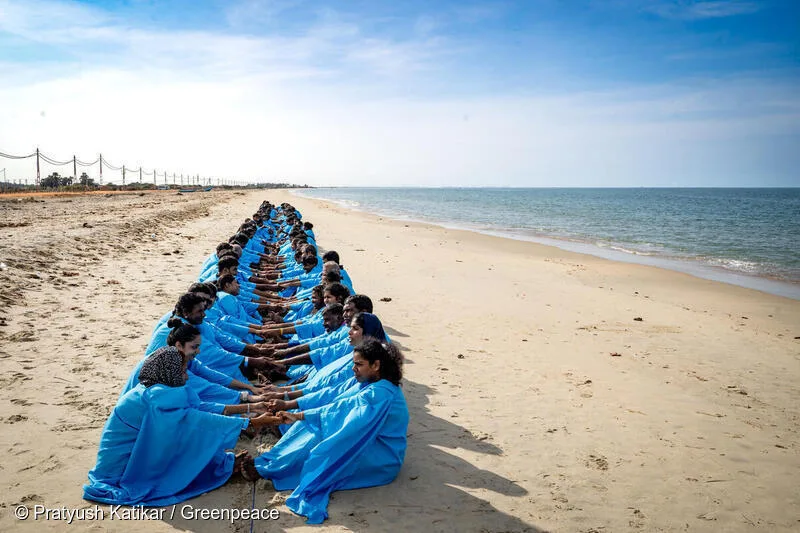
In one striking display of resilience and solidarity, on 10 October 2026, more than 300 members from climate-impacted communities from Sri Lanka, the Philippines, Bangladesh, Nepal, Papua New Guinea, and Senegal gathered at Keeri Beach in Mannar to form “The Rising,” a large-scale participatory art installation demanding accountability from the major fossil fuel companies most responsible for the climate crisis.
“Art has the power to share a powerful message that connects all humans and moves us all to take action,” said artist Dr. Subodh Kerkar.
Supported by Greenpeace South Asia and choreographed by internationally acclaimed ocean artist Dr. Subodh Kerkar, “The Rising” is performed in a united voice against big fossil fuel corporations who continue to drive climate change, amassing profits, while communities from the global south continue to face its adverse impact. Each participant represents their own or their community’s journey from climate vulnerability to climate action.
Together, these climate advocates, fisherfolk, farmers, street vendors, workers, Indigenous leaders, scientists, and legal experts created a powerful human visual artwork to make their voices heard and call for change.
Why the people took part – in their own words
“Cyclone Ditwah showed us how fast everything we depend on can be taken away. We are not waiting for someone else to act. We are documenting what is happening to us and demanding that the big oil and gas companies driving this crisis take responsibility for it.” — Selvartnam Dilaxan, Mannar – Sri Lanka
“Every summer the heat gets harder to survive. I’ve had days I couldn’t work because of the heat, and that means days without pay for my family. My health has suffered, this heat is making our lives worse.” — Sunita, India
“We have contributed the least to this crisis, yet we are among the first to lose our land, our food security, our way of life. Being part of this artwork in Mannar is our way of telling the world: we will not stay silent while polluters avoid responsibility.” — Mama Fatou Samba, Senegal
“For generations, my people have lived with the land and the nature around us, but that has changed… It is not our actions that are the cause for this, but the acts of those who do not recognise nor care for the hardship we face because of their choices. I came to Mannar because our voices must be heard.” — Vinzealhar Ainjo Nen, Papua New Guinea (Representing the people of Morobe Province, of Papua New Guinea. She will be sharing the stories of her people, the indigenous community of Watut)
What they’re demanding
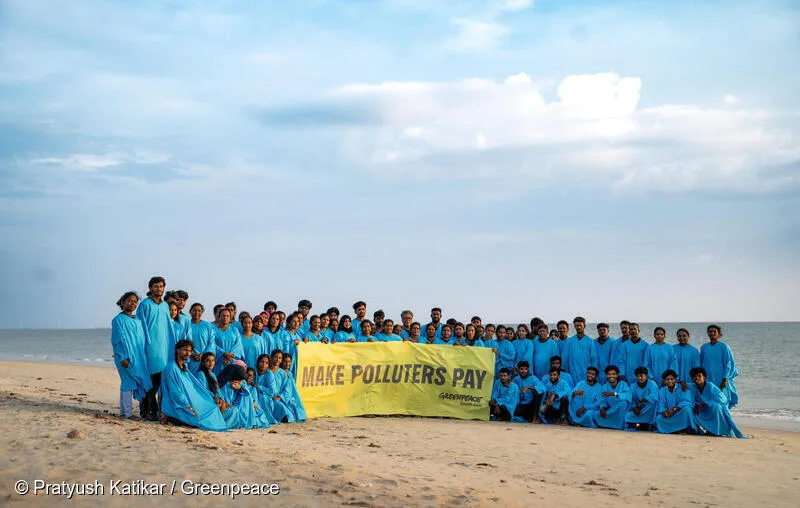
Ahead of COP31 (and beyond), these frontline communities are urging world leaders and policy-makers to act:
Hold Polluters Accountable: Pass national liability laws, enforce “polluter pays” measures, and tax corporate excess profits to fund climate adaptation, loss, and damage.
Stop Fossil Fuel Expansion: End approvals for new oil, gas, and coal projects, eliminate subsidies, and commit to binding emission reductions at COP31.
Protect Frontline Communities: Guarantee early warning systems, wage support, and legal protection for climate defenders against retaliation (including SLAPPs).
Uphold Human Rights & Transparency: Treat climate impacts as human rights violations, ensure frontline representation in negotiations, and force corporations to disclose true emissions and climate risks.
Why this is important
The climate crisis is global, but its causes are concentrated. For decades, a small group of major fossil fuel producers – many headquartered in or financed by countries in the Global North like the UK – made billions in profit, whilst knowing full well the impact this would have on people around the world.
Communities in the Global South didn’t create this crisis, but they are fighting its worst impacts every single day. They are demanding justice, accountability, and the basic human right to safety and dignity.
As governments prepare for COP31, communities from the Global South are calling for climate negotiations to move beyond promises and recognise the responsibility of those who have profited most from fossil fuels. “The Rising” is their voices being sounded for the world to listen to, calling for change.