- Report
Our Poisoned Land: How pesticides and fertilisers have pushed British nature to the brink
Overview
This report outlines the impacts on nature of pesticides and synthetic fertiliser. It urges the government to support farmers to reduce these chemical inputs by 50% by 2030, stretching to 80% by 2040. This will help restore nature, the foundation of our food security, and break the stranglehold of the agrochemical industry on farming and farmers’ livelihoods.
Key facts
- Biodiversity is plummeting. Birds, insects, butterflies and hedgehogs, some of our most iconic species, face a fight for survival. Pesticides and synthetic fertilisers are major drivers of this loss.
- A handful of giant agribusinesses have fuelled our dependency on fertilisers and ever-stronger pesticides, pushing these toxic and expensive chemicals as the default way to boost crop production.
- New Greenpeace analysis has revealed the scale of pesticide use in the UK, showing that over 100 individual pesticides are used across seven British food staples including carrots and potatoes. Out of the nine pesticides most frequently applied, almost all are classified as Highly Hazardous Pesticides, posing a serious risk to the natural world.
- When the pressure on nature is lifted, British wildlife can bounce back from depletion in a few short years. There are many farmers who are already experts in reducing the use of chemicals in agriculture. Their expertise – much of which has built up over many decades – should now lead the way.
- It’s time for ambitious and urgent action to reduce our dependency on pesticides and fertilisers . The government must support farmers to halve agricultural chemical use by 2030 – and commit to an 80% reduction by 2040. This is key to setting UK nature on the path to recovery.
Executive summary
For decades, a handful of giant agribusinesses have had a chilling impact on UK nature. They have fuelled our dependency on fertilisers and ever-stronger pesticides, pushing these toxic and expensive chemicals as the default way to boost crop production. Now, from our fields to our skies and our hedgerows to our waterways, we are seeing the consequences for the natural world. Biodiversity is plummeting, iconic species face a fight for survival and farmers are struggling as chemical costs soar in the wake of global conflicts. For the sake of wildlife, farmers and our food security, the UK government must urgently swap inaction for ambition and support farmers to shift away from this chemical dependency.
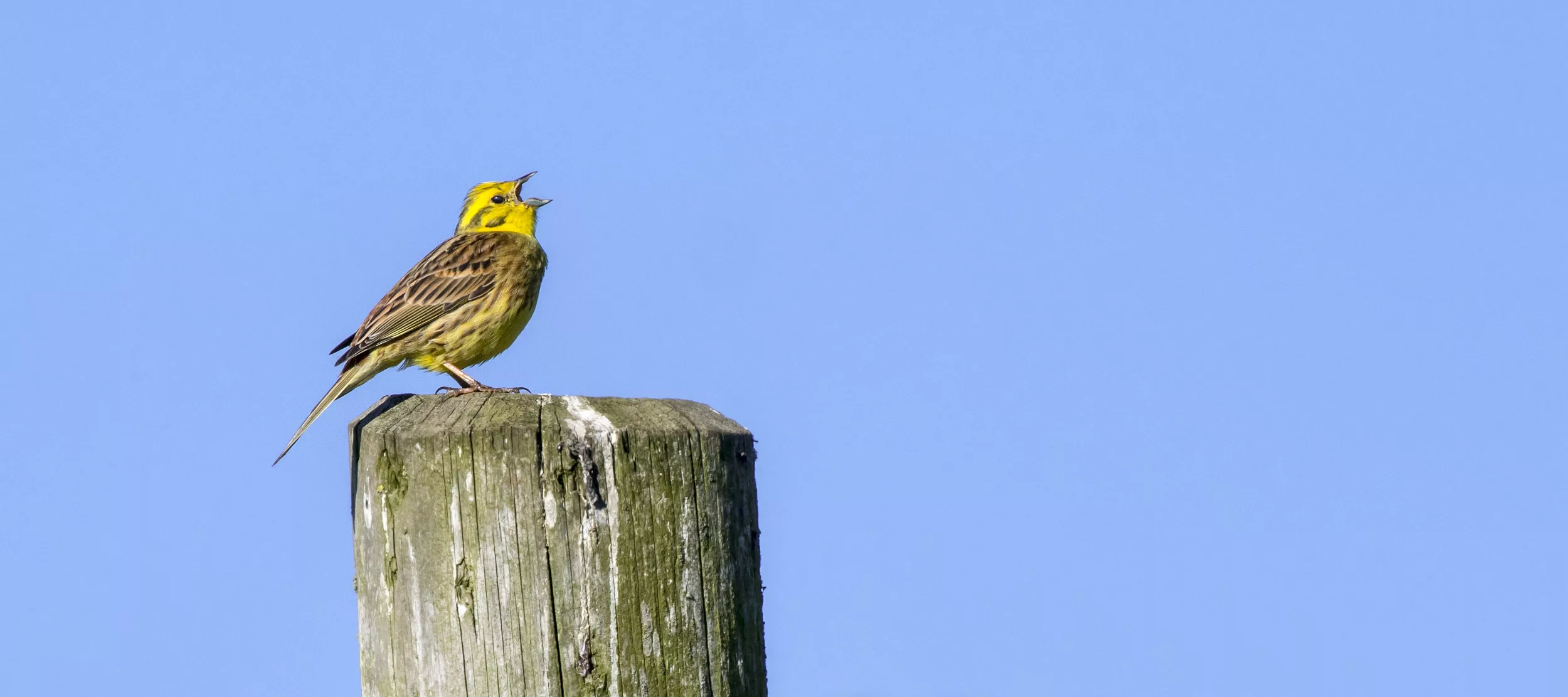
Look and listen closely enough, and the signs of nature in decline are everywhere. The birdsong in our skies is slowly quieting – with 19 million breeding pairs gone since 1966. The colourful flash of many of our butterflies is now a memory, with half of British species now missing from places where they would have been common in the 1970s. More and more of our fields have turned an unnaturally vivid green, their natural colouring lost to nitrogen fertilisers. Our hedgerows are no longer crowded with a tapestry of wildflowers. Our waters are plagued by algae, as chemicals travel far beyond farmland and leave species from kingfishers to freshwater insects facing a life-or-death struggle.
There is a link connecting all this loss and destruction of nature: chemical pesticides and nitrogen fertilisers. They are sold for enormous profit by giant agribusinesses to farmers who have faced decades of pressure to relentlessly increase crop production – regardless of the environmental cost. Farmers are nature’s custodians. They have witnessed this dramatic change first-hand, as pesticides and fertilisers have become the default drivers of more intensive agriculture. But the natural world that supports our farming and food production is now suffering intolerably.
Pesticides don’t discriminate. As well as targeting weeds and insects that eat crops, they harm the soil and the earthworms who keep it healthy. They kill insects, plants and are driving the decline in our birds. When they are carried away by the wind and the rain, pesticides end up everywhere from our hedgerows to our rivers, disrupting entire ecosystems. They can now be found almost everywhere in the UK – including in our bodies.
New Greenpeace analysis has revealed the scale of pesticide use in the UK, showing that over 102 individual pesticides are used across seven British food staples including carrots and potatoes. Out of the nine pesticides most frequently applied, almost all are classified as Highly Hazardous Pesticides, posing a serious risk to the natural world.
Artificial nitrogen fertilisers are very different chemicals. They boost the nutrient content of the soil far beyond natural levels, rather than killing animals and plants. But in doing so they also disrupt our environment. Nitrogen-treated fields become monocultures, attracting far fewer pollinators and crowding out delicate plants and wildflowers that many species rely on. Vast amounts of fertilisers are also wasted once they are sprayed, and the run-off fills our rivers with algae that starves water of oxygen and stops underwater plants from growing.
This pesticide and fertiliser crisis has also burdened farmers with unmanageable and unpredictable costs. At the time of writing, the US-Iran war is causing synthetic nitrogen fertiliser costs to rocket, a spike we also saw just a few years ago when Russia invaded Ukraine. A large percentage of nitrogen sprayed on crops is lost as pollution into the environment, making its use a financial and ecological disaster. Our dependence on pesticides and artificial fertilisers is an expense that many farmers could do without.
Yet for too long the government’s response has been ponderous. Agribusinesses have used tactics previously employed by tobacco and oil companies, systematically undermining scientific evidence of the damage they inflict. But their impact is becoming clearer and clearer, and farmers and scientists have shown that agriculture can thrive without dependence on chemicals. Ministers must respond – and agribusinesses must be held to account.
It’s time for ambitious, urgent and binding targets that support farmers to reduce their dependency on pesticides and fertilisers. The government must work with farmers to halve agricultural chemical use by 2030 – and commit to an 80% reduction by 2040. This is key to setting UK nature on the path to recovery.