- Press Release
British crops still sprayed with pesticides banned by EU due to cancer, fertility and fetal health warnings

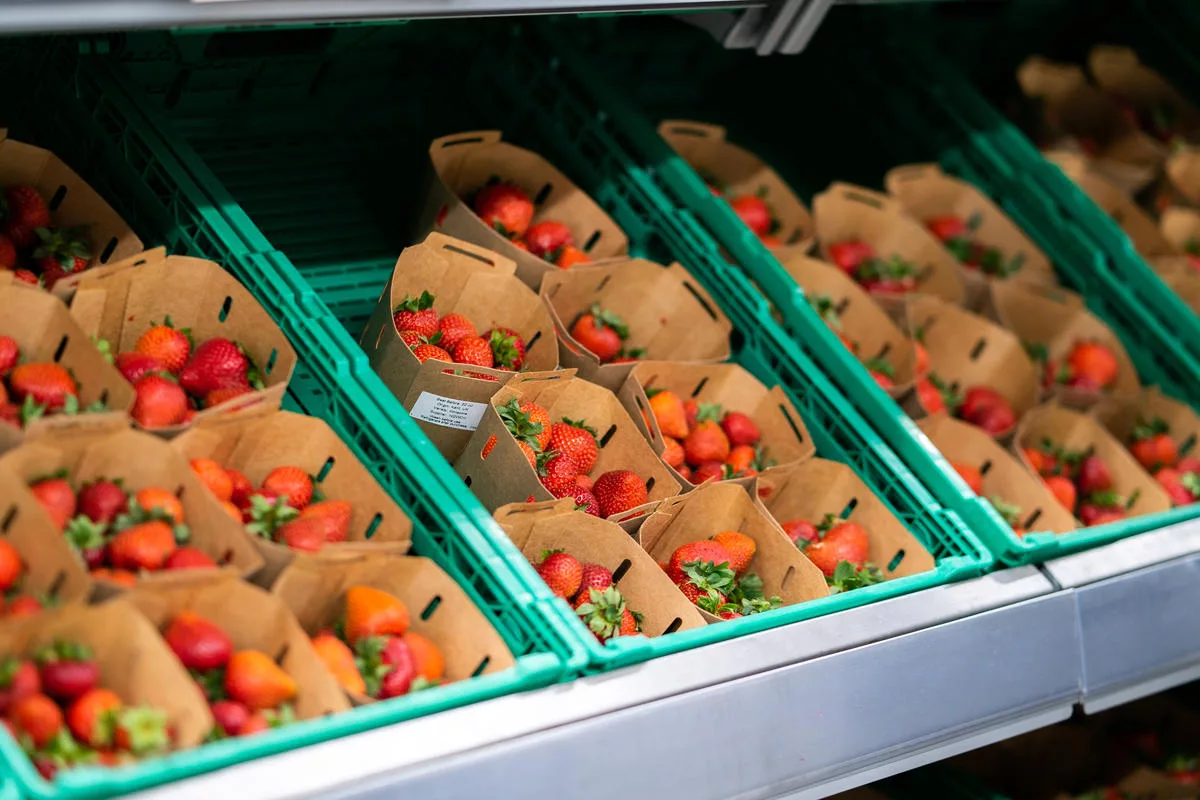
British crops, including strawberries, onions, potatoes, barley, and wheat, are being sprayed with pesticides banned across the European Union due to serious human and environmental health risks, an investigation by Unearthed has found.
Analysis by Unearthed, Greenpeace’s investigative journalism unit, revealed that out of 14 chemicals banned by the EU since Brexit but still allowed in the UK, 10 were found to pose serious hazards to human health, wildlife or the environment.
Among the most concerning are:
- Dimethomorph, sprayed on strawberries and onions, is banned in the EU due to being “toxic to reproduction,” meaning it can damage human fertility.
- Benthiavalicarb, sprayed on potatoes, was banned in Europe because of evidence that it is carcinogenic.
- Ipconazole, authorised in the UK for barley and wheat seeds, is banned in the EU for its potential to harm fertility or unborn babies.
Other chemicals in everyday use in Britain are linked to endocrine disruption, groundwater contamination, and high risks to the long term health of birds, mammals, and beneficial insects.
The exposure comes as the UK is negotiating a deal with the EU to streamline trade by reducing border checks and paperwork, making it easier for British farmers exporting produce to Europe. Under the “common sanitary and phytosanitary area” (SPS) deal, the UK would align its pesticide rules with the EU, therefore removing these 14 hazardous chemicals from use on British crops.
However, pesticides industry body Croplife UK has been lobbying against a quick ban on these chemicals under the deal, arguing in a recent report that immediate alignment could cost British farmers between £500m and £810m in the first year. They propose “managed alignment”, which would allow pesticides already banned in the EU to remain in use in Britain until each chemical is individually reassessed under a new process. This lengthy process could keep hazardous chemicals in use on British farms and infiltrate our food system for years.
Campaigners and wildlife groups argue the report is misleading and takes no account of the cost benefits for British farmers that smoother access to the UK’s biggest market would bring.
Nina Schrank, Greenpeace UK Nature campaigner, said:
“British farmers deserve a better deal – one that gives them fair access to markets and supports safer, more nature friendly farming. And consumers shouldn’t have to worry that everyday foods could pose risks to their health, that of their future children, or the wildlife and the natural world we all depend on.
“Croplife is prioritising industry profits over the health of people, wildlife, and the long-term interests of British farming. By aligning standards, the UK government can protect people and nature as well as giving farmers the fairer deal they urgently need. It really is that simple.”
Civil society groups, including PAN UK and Wildlife and Countryside Link are calling on the government to safeguard public health and the environment and reject Croplife’s attempts to delay alignment. Instead, the government should support those British farmers that need it to realign with EU pesticide standards.
With the SPS negotiations ongoing and a deal expected to be wrapped up in the coming months to take effect in 2027, the timing is critical.